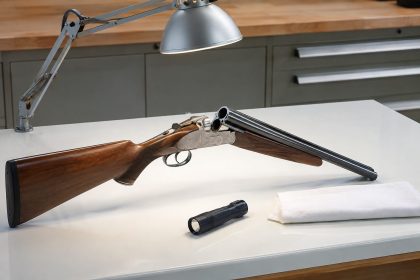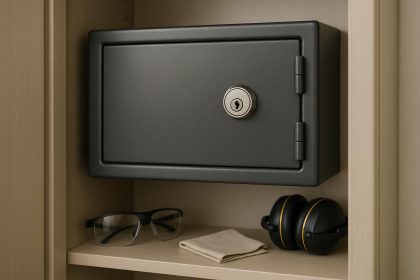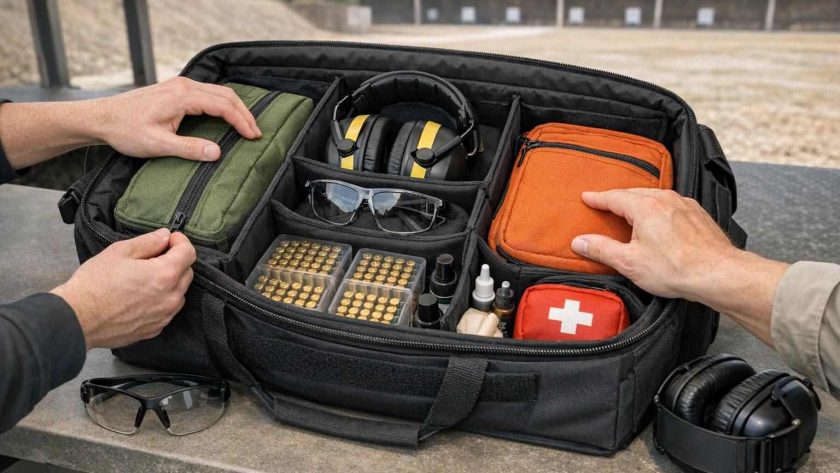
While sharing a bag is good for saving space, two shooters are likely to have different firearms, magazines, types of ammunition and parts for maintenance. So while you don't need to carry every possible bit of kit, you can set up a shared bag of safety items, and then have individual kits for each shooter. The aim of the shared bag is to make it easy for both to identify the right items to take, and to stop them accidentally taking the wrong items.
Start with the range's rules and the day's plan
Before thinking about how you are going to sort out your gear for the visit, check with the range as to any specific rules that may need to be adhered to for the visit. The day's plans should also be discussed to ensure you take the correct amount of gear.
You need to work out what you're going to be doing at the range before you start thinking about what you need to take. A short practice session will likely require less in the way of equipment than a longer trip to the range to carry out a variety of activities using different guns. Write down the guns you're going to take, the ammo you're going to use for each and any other bits and bobs that you can't share between you.
Remember how you will be transporting your gear, and how you will be accessing the various items within the bag. This is particularly important where firearms are concerned and are subject to laws, as well as the rules of the shooting range at which you will be practicing. Remember also that you are probably packing the gear of another shooter as well as your own.
Divide shared supplies from personal kits
It is also important to note that, in addition to sharing supplies for first aid, cleaning up after shooting and other needs for both shooters at the range, there are also supplies that are personal to each firearm. These would be best to store in individual zipped pouches within the bag, clearly labeled with the owner's name for the equipment and the reason for it being brought.
Label each individual pouch for a specific item and try to keep related items for each shooter in their own personal pouches (e.g. one person's magazines, another person's ammunition for different firearms, holsters, cases, etc.). Use different colors, have your initials on them, or use very large text to label them. The more obvious that each item is for a specific person for a specific firearm the better.
Loose small parts such as accessories and cleaning materials tend to fall to the bottom of bags. They need to be stored in zipped pouches and clearly labeled so they are easily identified and won't be taken home by mistake.
Match ammunition to the correct firearm
When checking ammunition for the shoot, it's best to check each type in its original packaging. This can be in the original boxes, or alternatively in similar type of container that is clearly labeled and used for ammunition storage.
Reveal the cartridge designation on the firearm from the manufacturer's instructions and the ammunition packaging. If there is any ambiguity with the above then seek advice from the relevant range staff, firearms manufacturer or refer to current official guidance as contained within the owner's manual.
Do not let your ammunition come into contact with any solvents (cleaning solutions), oils (lubes), loose batteries, sharp tools, etc. during transport. Ammunition should be stored in a closed, dry container and only transported in original packaging or in specifically designed containers for the storage of ammunition. Ammunition should not be left loose in a bag and mixed with other items. Clearly label any containers in which you transfer ammunition and always check the container before you leave home.
Build a common protection and comfort kit
Even if one of you always has Eye protection for the range, pack spare Eye protection for the other in case they forget it. It is also important to have spare Hearing protection for the other in case they have lost or damaged their usual ones, or they simply got wet and need to be changed for a dry pair.
The ear protectors for both people must fit well to be of use. Some eye glasses are too bulky to wear over some types of hearing protection. It is best that both people have their own different types of eye protection and then the two people can swap the different comfort items that they like best to carry in the bag as a shared spare.
Additional useful items for the bag which aid comfort whilst at the range are things such as sunscreen, gloves (if shooting in cold weather), gloves (if shooting in frost), warm hat, and a towel. A note book and pen to log equipment and or ammunition used for future reference is also very useful.
Use a checklist before, during, and after the trip
This can be a simple list that is used each time you go to the range, and thus kept very short. It will list out the various items such as the firearms, cases, ammunition, the various magazines, your eye and ear protection, any range required documents and targets, etc. Ensure that each item corresponds to the correct firearm.
At the range store personal shooting equipment in designated areas of your bag. Collect magazines and the relevant ammunition for each shooter in like areas within your bag. Store equipment for guns that have been put away in those related containers, not down at the end of your bag.
When leaving a range, ensure that all items, including personal items, have been removed from the firing area before departing. Upon returning home, refer to the firearms' owner's manual to clean all parts as directed. Inspect shooting range supplies for visible damage or wear. If damaged, replace instead of stowing away for future use.
In evaluating the setup, it is wise to consider which of your dividers or containers caused confusion, which gear was unnecessary to bring, and which safety supplies were missing. Often making slight changes to labels, to container form, or to your shooting range checklist can prevent similar mistakes in future visits to a shooting range.